Baked chicken wings can develop crisp skin without added oil when dry surfaces, separated pieces, and moving hot air work together. In food-science terms, crispness is a texture created as the skin loses moisture and its structure becomes brittle; airflow helps by carrying away water vapor, while a wire rack exposes more of each wing to heat. The method matters because chicken skin contains fat already, but adding oil is not required for browning or crispness. This guide explains how airflow affects wing texture, how drying and oven setup support it, and how to cook wings safely while judging results.
Airflow and baked-wing crispness
Airflow is the movement of heated air around food. For baked wings, it is a cooking condition rather than an ingredient: circulating heat supports evaporation from the skin and helps the exposed surfaces heat more evenly. The National Institute of Standards and Technology describes convection as heat transfer involving fluid motion; in an oven, that moving fluid is air. Air movement cannot remove moisture trapped beneath a crowded pile of wings, so spacing and exposure are as important as oven temperature.
The useful outcome is a dry, browned exterior with tender meat, not simply a high temperature. Crispness depends on several connected factors: surface moisture, the skin’s fat and protein structure, heat transfer, and time. A convection setting can improve air circulation, but conventional ovens can also produce crisp wings when pieces are arranged in a single layer on a rack and turned as needed.
Convection and hot-air circulation
Convection ovens use a fan to move hot air around food. The fan can reduce stagnant pockets of cooler, humid air near the surface, supporting more consistent evaporation and browning. Oven designs differ, however, so a recipe’s stated temperature may need adjustment when switching between conventional and convection modes. Follow the appliance manual or recipe guidance, and check doneness with a food thermometer rather than relying on time or color alone.
Rack exposure and spacing
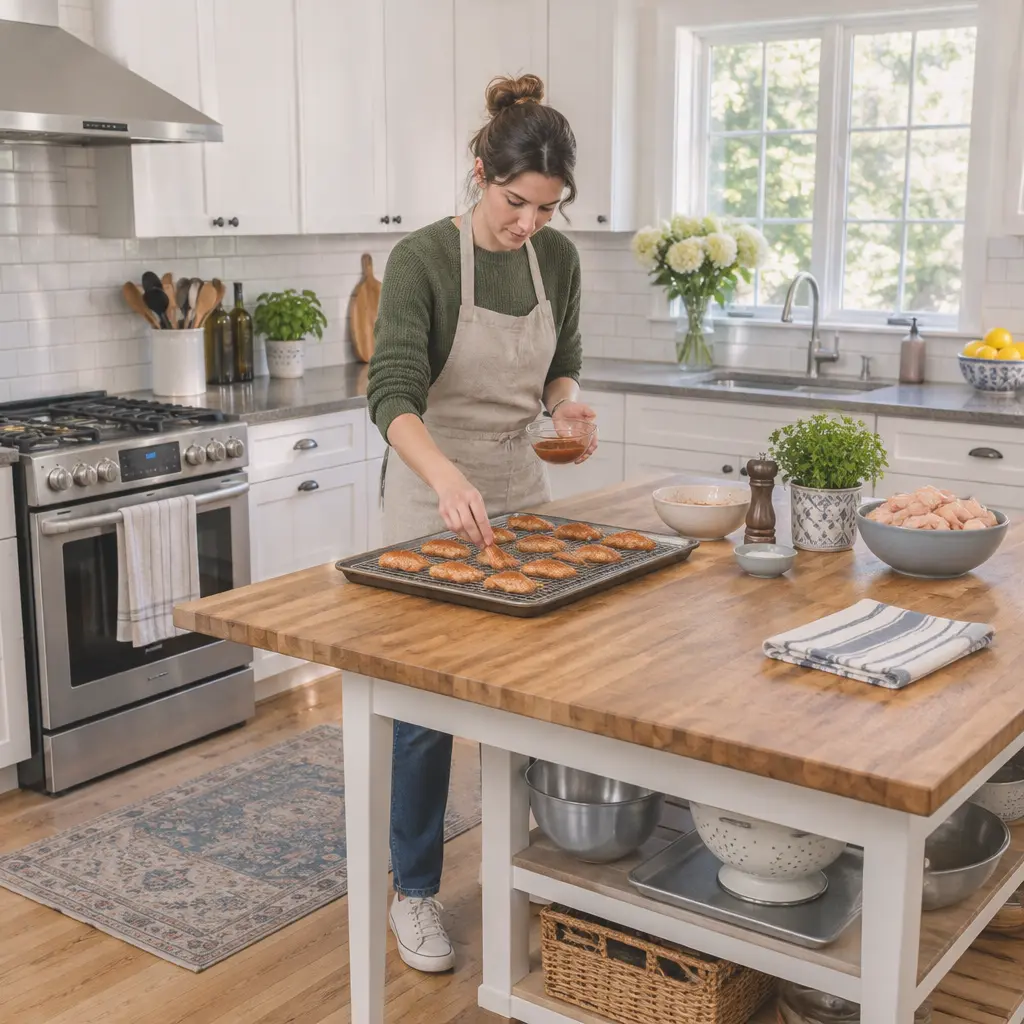
A wire rack set over a rimmed baking sheet lets hot air reach the underside of each wing, while the tray catches drippings. Arrange wings with space between them; touching or overlapping pieces shelter one another from airflow and allow moisture to collect. If no rack is available, wings can be baked directly on a lined sheet, but the undersides may brown less evenly and may need turning.
Skin preparation and baked-wing texture
Skin preparation is the next part of the crispness equation. Freshly washed or thawed wings may carry surface water, and that water must evaporate before the skin can brown effectively. The U.S. Department of Agriculture advises against washing raw poultry because splashing can spread bacteria around the kitchen; instead, handle it safely and pat it dry with paper towels. Drying improves surface conditions for cooking, but it does not replace thorough heating.
Refrigerator drying
For a drier surface, pat wings thoroughly and refrigerate them uncovered on a rack for several hours or overnight, keeping raw poultry on the lowest shelf to prevent drips from contaminating other foods. This allows surface moisture to evaporate before baking. Keep the refrigerator at 40°F (4°C) or below, consistent with USDA food-safety guidance, and do not leave raw chicken at room temperature to dry.
Baking powder and seasoning
Some home cooks use a small amount of baking powder, not baking soda, as a dry coating. Baking powder can alter the skin’s surface and encourage a rougher, drier texture as the wings bake. Use a modest quantity and distribute it evenly; too much can leave a chalky or bitter taste. Salt can help season the meat and draw some moisture toward the surface, so it is often added before the refrigerator-drying step. Neither ingredient is essential, and neither substitutes for spacing or safe cooking.
Oven method and food safety
A reliable no-added-oil method combines dry wings, an elevated rack, hot oven air, and verification of internal temperature. Because wing size, oven calibration, and airflow vary, cooking times should be treated as estimates. The USDA’s safe minimum internal temperature for poultry is 165°F (74°C), measured with a food thermometer in the thickest part without touching bone.
Practical baking sequence
- Heat the oven to about 425°F (220°C), or use a convection setting according to the appliance instructions.
- Pat the wings dry. Season them, optionally including a small amount of baking powder, and arrange them in one layer on a rack over a rimmed sheet.
- Bake until browned and crisping, turning once if the oven or rack produces uneven color. Begin checking early because wing sizes and ovens differ.
- Confirm that the thickest pieces reach at least 165°F (74°C). For a firmer exterior, continue cooking briefly while monitoring both texture and temperature.
- Add sauce after baking if crisp skin is the priority; wet sauce can soften the exterior. Serve promptly for the best texture.
The Centers for Disease Control and Prevention also emphasizes safe handling: keep raw poultry separate from ready-to-eat foods, wash hands and utensils after contact, and refrigerate perishable leftovers promptly. Crispness is a quality goal; safe handling and temperature are non-negotiable.
Troubleshooting texture
- Soft skin: Check whether the wings were thoroughly dried, crowded, or baked without underside exposure. Use a rack and leave gaps.
- Uneven browning: Rotate the pan or turn the wings, especially in ovens without a convection fan.
- Overly dark skin: Lower the heat slightly or move the pan away from the strongest top element, while still cooking to a safe internal temperature.
- Skin softens after saucing: Toss with sauce just before serving, or offer sauce on the side.
Evaluating crispness without added oil
Crispness is a sensory property, so there is no single home-kitchen measurement that guarantees it. A practical check is to compare the skin’s surface: it should look dry and browned, feel firm rather than wet, and resist becoming limp immediately after baking. A simple kitchen test is to bake a small batch with pieces spaced apart and another batch crowded together; the contrast illustrates how airflow and exposure affect results. For a visual comparison, a chart could track spacing, rack use, oven mode, and the time each batch takes to brown.
“No added oil” does not mean “fat-free.” Chicken wings contain natural fat, some of which renders during cooking. The goal is to use the skin’s own fat and the oven’s heat rather than coating the wings with additional oil. Actual fat and calorie content varies with wing size, whether skin is eaten, and how much rendered fat remains on the serving.
Conclusion: airflow is the key texture tool
Baked-wing crispness comes from managing moisture and heat: dry the skin, keep pieces separate, expose their undersides on a rack where possible, and let hot air circulate. Convection can help, but careful arrangement also works in a conventional oven. Use seasoning or a little baking powder only as optional aids, sauce after baking, and verify every batch reaches the USDA-recommended 165°F (74°C). Try one variable at a time—such as rack use or refrigerator drying—to learn what works best in your oven, and consult USDA and CDC guidance for safe poultry handling.
Sources: U.S. Department of Agriculture, Safe Minimum Internal Temperature Chart, https://www.fsis.usda.gov/food-safety/safe-food-handling-and-preparation/food-safety-basics/safe-temperature-chart; U.S. Department of Agriculture, Washing Food: Does it Promote Food Safety?, https://www.fsis.usda.gov/food-safety/safe-food-handling-and-preparation/food-safety-basics/washing-food-does-it-promote-food-safety; Centers for Disease Control and Prevention, Chicken and Food Poisoning, https://www.cdc.gov/food-safety/foods/chicken.html; National Institute of Standards and Technology, Heat Transfer, https://www.nist.gov/pml/heat-transfer