
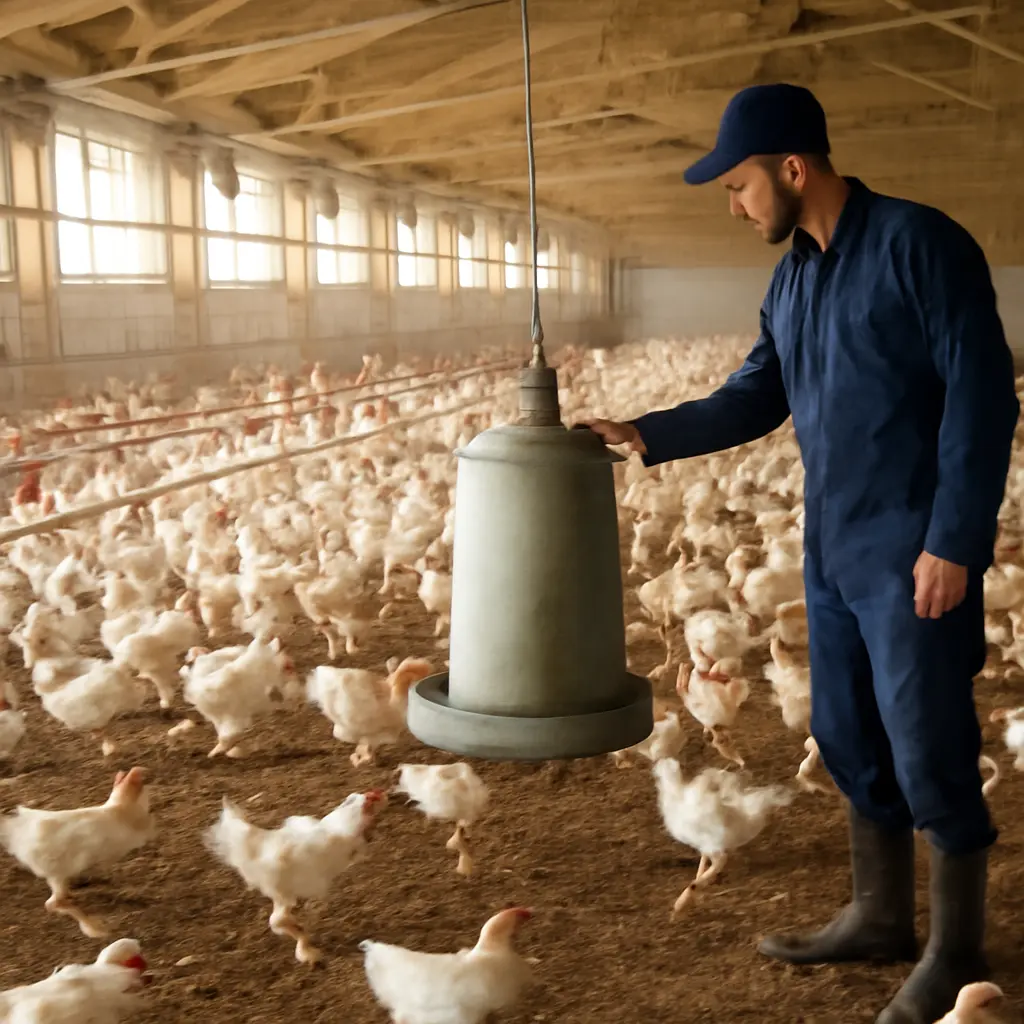
Commercial poultry farming is the large-scale raising of chickens and other domesticated birds for meat or eggs. What happens on a modern farm depends on the bird’s purpose, the production system, and the standards in the country and company supply chain: most U.S. meat chickens live in indoor flocks, while egg-laying hens may be kept in conventional cages, cage-free barns, or pasture-based systems. Birds are bred, housed, fed, monitored, and eventually transported for slaughter or egg collection. These practices matter because poultry is a major global food source: the U.S. Department of Agriculture (USDA) estimates that Americans consume more than 100 pounds of chicken per person annually, and the Food and Agriculture Organization (FAO) reports that poultry meat accounts for a growing share of worldwide meat production. Understanding housing, health, welfare, and slaughter helps consumers evaluate claims and the trade-offs behind affordable poultry.
How Commercial Poultry Production Works
Commercial poultry production is an integrated sequence of breeding, hatching, growing, processing, and distribution. The USDA defines broilers as chickens raised for meat, distinguishing them from pullets and laying hens raised for egg production. Production commonly involves specialized farms and hatcheries, though the precise business arrangements vary. In many U.S. broiler systems, an integrator supplies chicks, feed, and veterinary guidance while a contract grower provides housing, labor, and daily care.
The two main production pathways are broiler farming for meat and layer farming for eggs. They share practices such as controlled housing, formulated feed, vaccination, and flock monitoring, but differ in bird strains, life spans, housing needs, and what happens at the end of production. The following sections explain how those differences shape everyday conditions.
Meat chickens: broiler flocks
Broilers are chickens selected for efficient meat production. Chicks arrive at a prepared poultry house, where staff manage temperature, ventilation, litter, water, and feed. Flocks typically grow for several weeks before they are caught and transported to a processing plant; exact schedules vary with genetics, market requirements, and local rules. Fast growth can make production efficient, but it also raises welfare concerns when birds develop leg or mobility problems before slaughter.
Egg production: pullets and laying hens
Pullets are young female chickens being raised before they begin laying; a layer hen is a mature bird kept for egg production. Hens usually enter production at around 18 to 20 weeks, with output affected by age, genetics, nutrition, lighting, and health. Eggs are collected and graded, while spent hens are commonly sent to slaughter for meat products or other uses. Egg labels such as “cage-free” and “free-range” describe particular housing or access claims, not a complete guarantee about every aspect of welfare.
How Housing Shapes Poultry Life
Poultry housing is the physical environment in which birds live, including space, flooring, ventilation, lighting, and opportunities to express natural behaviors. The National Chicken Council describes U.S. broiler houses as climate-controlled barns designed to protect flocks from weather and predators. Housing types are not interchangeable: systems differ in confinement, access to outdoor areas, labor needs, and exposure to environmental hazards.
Indoor broiler barns
Most U.S. broilers are raised in large indoor barns on bedding material, commonly called litter. Ventilation removes heat and moisture and helps control dust and gases such as ammonia. Birds can move around the barn, but stocking density and flock size influence how much usable space each bird has and whether birds can reach resources easily. Poor litter management can contribute to footpad lesions and breast blisters, while inadequate ventilation can worsen air quality and heat stress.
Layer housing: cages, cage-free barns, and outdoor access
Conventional cage systems confine hens in enclosures designed to provide feed and water access; cage-free systems keep hens loose inside a barn, generally with nests and perches. Free-range and pasture-based systems add outdoor access, though the amount and quality of access can vary with standards, weather, and farm management. The USDA’s 2023 Census of Agriculture counted about 378 million laying hens in the United States, illustrating the scale at which housing decisions affect birds.
Housing involves trade-offs rather than a single measure of welfare. Cages can reduce some injuries and make egg collection predictable, but restrict movement and behaviors such as nesting. Cage-free environments permit more movement and social behavior, but can bring risks of feather pecking, collisions, and difficulty managing large groups. The European Union has prohibited conventional battery cages for laying hens since 2012, while U.S. rules vary by state and market commitments.
Outdoor access and environmental conditions
Outdoor systems can give birds access to sunlight, vegetation, and more space, but outdoor access alone does not establish that conditions are consistently good. Weather extremes, predators, parasites, and disease exposure require active management. Indoor farms likewise depend on reliable ventilation, backup power, clean water, and temperature controls. A useful comparison therefore considers both the written housing standard and how the farm monitors and maintains conditions.
How Farmers Manage Feed, Health, and Welfare
Poultry health management combines nutrition, vaccination, biosecurity, environmental monitoring, and veterinary care. The World Organisation for Animal Health (WOAH) defines animal welfare as the physical and mental state of an animal in relation to the conditions in which it lives and dies. In practice, welfare is assessed through indicators such as mortality, injuries, mobility, body condition, behavior, and access to water and feed—not simply by the presence of a particular label.
Feed, water, and growth
Commercial diets are formulated to meet birds’ needs at different life stages. They commonly use grains and protein-rich ingredients, with minerals and vitamins added as required. Automated lines provide feed and water, and workers check that equipment functions and birds are using it. In broilers, selective breeding and carefully managed nutrition support rapid growth and efficient feed conversion; the resulting production efficiency has prompted concern about whether some birds’ bodies develop faster than their legs and organs can comfortably support.
Disease prevention and antibiotics
Biosecurity means practices that reduce the introduction and spread of disease, including limiting visitors, cleaning equipment, controlling pests, and separating flocks. Vaccines are used against diseases of concern, while staff monitor behavior, feed and water consumption, and mortality for signs of illness. Antibiotics may be used under veterinary oversight to treat or control disease, but routine use for growth promotion is restricted in the United States. The U.S. Food and Drug Administration’s Veterinary Feed Directive requires veterinary authorization for medically important antibiotics administered in feed or water.
Antimicrobial resistance is a broader public-health concern because resistant bacteria can move through people, animals, food, and the environment. The Centers for Disease Control and Prevention recommends safe food handling, including cooking poultry to an internal temperature of 165°F (74°C), as one practical way to reduce foodborne illness risk.
Welfare monitoring and common concerns
Common welfare concerns include overcrowding, heat stress, painful injuries, limited opportunities for natural behavior, and rough handling during catching and transport. Humane World for Animals and other welfare organizations have reported that fast-growing broiler strains can face elevated risks of impaired walking and related health problems. Industry assurance programs and animal-welfare standards often use audits, training, and performance measures, but the level of transparency and the specific requirements differ.
The World Organisation for Animal Health’s poultry guidance emphasizes outcomes such as mortality, injuries, gait, and signs of disease. These measures help distinguish a system’s label from conditions experienced by the birds. A farm can improve welfare through better litter and air management, suitable stocking levels, enrichment, careful catching, and prompt treatment of sick or injured animals.
What Happens During Transport and Slaughter
At the end of a production cycle, broilers are caught, placed in transport modules, and taken to a processing plant. There, birds are unloaded, inspected, stunned, and slaughtered, followed by steps such as defeathering, evisceration, chilling, and inspection. The handling and transport period is important because birds can experience stress, injury, temperature exposure, or delays.
Catching and transport
Catching is the removal of birds from the house for transport. It may be done by trained crews or mechanical equipment, and the methods used affect the risk of bruising and fractures. Transport planning must account for journey time, weather, ventilation, and loading density. In the United States, the USDA’s Food Safety and Inspection Service oversees poultry processing under federal inspection requirements, while animal-transport rules and protections vary according to jurisdiction and production context.
Processing and food safety
Processing plants convert live birds into inspected food products. Stunning is intended to render birds unconscious before slaughter, and plants operate under food-safety controls designed to prevent contamination. The USDA Food Safety and Inspection Service inspects poultry products and enforces applicable sanitation and pathogen-control requirements. For consumers, refrigeration, avoiding cross-contamination, and thoroughly cooking poultry remain essential safeguards.
Environmental Impacts and Real-World Trade-Offs
Commercial poultry production has environmental effects through feed production, energy and water use, manure, and emissions. The FAO’s global assessments identify feed supply chains as a major contributor to livestock-sector impacts, although poultry generally produces less greenhouse-gas emissions per unit of meat than ruminant livestock. The precise footprint depends on feed ingredients, energy sources, land-use change, farm efficiency, and waste management.
Manure, litter, and nutrient management
Poultry manure and used litter contain nutrients that can benefit crops when applied at appropriate rates. If storage or application is poorly managed, excess nitrogen and phosphorus can run off into waterways or contribute to air pollution. Farms and regulators use nutrient plans, storage controls, and application timing to reduce these risks. The same litter that supports bird comfort therefore requires careful handling after a flock leaves.
A practical comparison of production claims
A label is most useful when its specific claim is clear. “Cage-free” addresses the absence of cages for laying hens, but does not automatically mean outdoor access. “Free-range” indicates outdoor access under the relevant standard, but does not by itself specify flock size, outdoor conditions, or the bird’s breed. Organic certification addresses a wider set of production requirements, including feed and certain medication rules, but should not be treated as a complete measure of welfare. Consumers can compare standards, ask retailers about auditing, and look for public reporting on mortality, injuries, and farm practices.
Conclusion: What Commercial Poultry Production Means
Commercial poultry farming encompasses specialized meat and egg systems, with daily life shaped by housing, genetics, feed, health management, and handling. Indoor broiler barns dominate U.S. meat production, while egg hens may live in cages, cage-free barns, or systems with outdoor access. Each approach presents distinct welfare and environmental trade-offs, and conditions can vary substantially between farms.
The most reliable way to understand what happens to poultry is to look beyond broad labels and examine measurable outcomes, independent standards, and transparent farm practices. Readers can consult USDA and WOAH guidance, compare certification requirements, and support policies and purchasing choices that encourage humane handling, sound health management, and responsible environmental stewardship.
Sources: U.S. Department of Agriculture, Poultry—Production and Value and Census of Agriculture, https://www.nass.usda.gov/Publications/AgCensus/2022/; Food and Agriculture Organization of the United Nations, Gateway to poultry production and products, https://www.fao.org/poultry-production-products/en/; National Chicken Council, Broiler Chicken Industry Key Facts, https://www.nationalchickencouncil.org/about-the-industry/statistics/; World Organisation for Animal Health, Terrestrial Animal Health Code: Animal Welfare and Broiler Chicken Production Systems, https://www.woah.org/en/what-we-do/standards/codes-and-manuals/terrestrial-code-online-access/; European Commission, Animal welfare: laying hens, https://food.ec.europa.eu/animals/animal-welfare/animal-welfare-practice/animal-welfare-farm/laying-hens_en; U.S. Food and Drug Administration, Veterinary Feed Directive, https://www.fda.gov/animal-veterinary/development-approval-process/veterinary-feed-directive-vfd; Centers for Disease Control and Prevention, Chicken and Food Poisoning, https://www.cdc.gov/food-safety/foods/chicken.html; U.S. Department of Agriculture, Food Safety and Inspection Service, Poultry Products Inspection, https://www.fsis.usda.gov/inspection/inspection-programs/poultry-products-inspection; Food and Agriculture Organization of the United Nations, Tackling climate change through livestock: A global assessment of emissions and mitigation opportunities, https://www.fao.org/3/i3437e/i3437e.pdf; Humane World for Animals, Broiler chickens, https://www.humaneworld.org/en/all-animals/broiler-chickens.


